
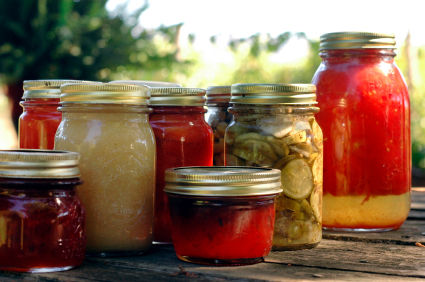
Home Canning dates back to the 18th century during the time where Napoleon Bonaparte realized the need to provision his army with food while they were away fighting. By providing these canned foods to his army, it gave him a huge advantage over his opponents. The canning process allows us to keep food way beyond its normal storage period by preventing microorganisms from deteriorating the food. Because the food is canned at the time of the fruits/vegetables prime nutrient content, they will retain most of their nutritional content if not gain more nutrients from the canning process.
In the best-selling book, The Prepper’s Cookbook, where over 300 recipes were published, canning and preserving food was emphasized as an economic way to save money and use food to it’s fullest. Here are some other benefits.
Benefits of Home Canning Foods
- Eat healthier
- Food freedom
- Food preserved with the freshest ingredients
- No additives or chemicals
- Better taste
- The liquid used to preserve fruits and vegetables also includes nutrients, so rather than draining and adding water, use the canning liquid, especially in soups or stews.
I can pickles but they get soft. Can anyone tell me a recipe for crunchy pickles. Thank you, Cathy
I heard that if you cold pack your pickles, they are crunchy after the canning process. Here is a great blog post on how to do this:
http://a-homesteading-neophyte.blogspot.com/2009/08/why-i-think-my-pickles-gone-soft.html
When lacto or salt fermenting pickles, adding some carrots to the jar can help keep the cukes crispy.
The keys to keeping your pickles crisp are:
Cutting of 1/8 inch of the blossom end (the opposite from the stem end),
Brining the cucumbers, and
if you do not remove the blossom end, add 2 grape leaves to every jar (I kid you not, they have something in them that makes the pickles crunchier, by neutralizing the enzyme in the blossom end that makes the cukes soft).
Cold packing your cucumbers also helps with keeping them crisp.
Soak cucumbers in ice water for 4 – 5 hours prior to pickling.
Alum may be safely used to firm fermented pickles. Alum does not improve the firmness of quick – process pickles.
The calcium in lime may improve pickle firmness. If you choose to use lime, purchase food-grade pickling lime, DO NOT USE AGRICULTURAL OR BURNT LIME. Food-grade lime may be used as lime-water solution for soaking fresh cucumbers 12 to 24 hours before pickling them. Excess lime absorbed by the cucumbers must be removed to make safe pickles. To remove excess lime, drain the lime-water solution, rinse, and then resoak the cucumbers in fresh water for 1 hour. Repeat the rinsing and soaking steps two more times.
You don’t have to do all of these but any try one or more of these steps and you should notice an improvement.